
Sala Trono
Municipalities
The Sala Trono in Tarragona is a space dedicated to the performing arts that focuses on contemporary theatre, new dramaturgy and theatrical creation.
Located at Reding Street, 14, in the Teatre El Magatzem, it offers a program that combines comedies, dramas, documentary theater, and stage productions from various companies. It's an alternative for those who want to discover shows beyond the mainstream theater circuits and enjoy the performing arts in a more intimate setting.
Founded in 2003, Sala Trono has established itself as a cultural project closely linked to Tarragona and the Catalan theater scene. In addition to programming shows, it also promotes its own productions, provides a platform for contemporary creation, and organizes FITT Noves Dramatúrgies, a festival that contributes to expanding the city's theatrical offerings.
A theatrical program to discover new stories
One of the main attractions of the Sala Trono is the diversity of its program. The schedule offers a range of theatrical languages, from text-based productions to shows that incorporate music, movement, or documentary theatre techniques.
Each season presents a selection of shows from performing arts companies and professionals, with stories that explore human relationships, memory, social conflicts or everyday situations from very different perspectives.
The program includes both thought-provoking works and those that use humor to address current issues. This variety ensures that each visit is a unique experience and offers viewers the opportunity to discover creators, performers, and storytelling styles.
The program is updated throughout the year, so it is advisable to consult the updated schedule to find out about the available shows, dates and characteristics of each performance.
More than two decades growing theatre in Tarragona
The story of Sala Trono began on February 7, 2003, when it opened its doors with the show Petits suïcidis. The first venue was a 50-seat hall located in the Plaça de Dames i Vells, in the Part Alta of Tarragona.
From its inception, the project was born with the desire to offer an alternative to the municipal theater program and expand the possibilities of enjoying theater in the city.
Over the years, Sala Trono has developed an activity that goes beyond simply presenting shows. It also works in professional theater production and stage research, two areas that are integral to its identity.
This dual role, as an exhibition space and as a production company, helps to revitalize the theater sector and give visibility to the work of contemporary creators.
FITT Noves Dramatúrgies: another way of experiencing theater
One of the initiatives linked to the Sala Trono is the FITT Noves Dramatúrgies, a festival that it has been organizing since 2011.
The festival is part of Sala Trono's work to promote contemporary performing arts and give visibility to other ways of understanding theatrical creation.
For viewers interested in discovering new languages and expanding their cultural experience, it is a proposal that complements the usual programming of the hall.
Bringing the performing arts closer to new audiences
The Throne Room also dedicates part of its activity to fostering interest in theatre among teenagers and young people.
With this objective, it promotes special discounts for people under 30 and organizes recreational and educational activities that seek to bring contemporary theatre closer to new spectators.
This desire to create new audiences is part of a project that understands the performing arts not only as a cultural leisure activity, but also as an opportunity to discover ideas, share experiences, and come into contact with different perspectives on the world.
AD · ESTABLIMENTS_ESTABLIMENT · Slot: 3717948413
Nearby routes
On a route through the medieval castles of the Gaià River
Aiguamúrcia, Altafulla, El Catllar, Montferri, Rodonyà, Tarragona
The Gaià is one of the rivers that cross the province of Tarragona. What makes it special is that along its course through the regions of Alt Camp, Conca de Barberà and Tarragonès - perpendicular to the coast - there is…
150 years of the railway from Tarragona to Martorell
Altafulla, El Vendrell, Gelida, L'Arboç, La Granada, Martorell, Sant Sadurní d'Anoia, Santa Margarida i els Monjos, Subirats, Tarragona, Torredembarra, Vilafranca del Penedès
2015 marked the 150th anniversary of the arrival of the railroad that connected the lands of Penedés and Tarragona with Barcelona. This construction involved the connection, by rail, of two of the Catalan capital, Tarragona and Barcelona,…
Tarraco, Roman legacy world heritage
Altafulla, Constantí, Roda de Berà, Tarragona
On this route we suggest you put on a tunic and take a horse-drawn chariot to enter Tarragona and let ourselves be carried away by the Roman legacy that is preserved. Some Roman remains that have survived over the years and that in 2000 UNESCO…
Grand Tour de Catalunya - Section 1. Vineyards with taste in the sea: from Barcelona to Tarragona
Aiguamúrcia, Barcelona, Cabra del Camp, Cardona, El Vendrell, Monistrol de Montserrat, Mura, Navès, Sant Fruitós de Bages, Sant Llorenç de Morunys, Sant Sadurní d'Anoia, Sitges, Solsona, Súria, Tarragona, Vilafranca del Penedès
I want to do this route by electric vehicle! This route is designed to be done by electric vehicle, although it can be done with any other car. Along the route we will suggest municipalities that have charging points and places of interest…
Grand Tour de Catalunya - Section 2. Meeting history: from Tarragona to Lleida
Bot, Cambrils, Capafonts, Cornudella de Montsant, Deltebre, El Perelló, El Pinell de Brai, Falset, Gandesa, Guimerà, L'Ametlla de Mar, L'Espluga de Francolí, La Sénia, Les Borges Blanques, Lleida, Miravet, Montblanc, Salou, Tarragona, Tortosa, Ulldecona, Vallbona de les Monges
I want to do this route by electric vehicle! This route is designed to be done by electric vehicle, although it can be done with any other car. Along the route we will suggest municipalities that have charging points and places of interest…
the castle fact
L'Arboç, La Bisbal del Penedès, Tarragona, Valls, Vilafranca del Penedès
The castells are one of the traditions par excellence of Catalan culture, hundreds of people united to defy gravity and perched on top of each other to make constructions that have reached up to ten floors. The small ditches that crown the…
Events
Sant Martí Festival in Altafulla
From 3 to 8 NovemberVinyartia - The artistic exhibition of Vinyols i els Arcs
From 6 to 8 NovemberWinter Festival in Vilallonga del Camp
From 5 to 11 NovemberGastronomic Days with New Extra Virgin Olive Oil in Cambrils
From 30 October to 15 NovemberFree guided tours of the Vila-seca Canal Mayor
8 NovemberAmateur Theatre Cycle in El Pla de Santa Maria
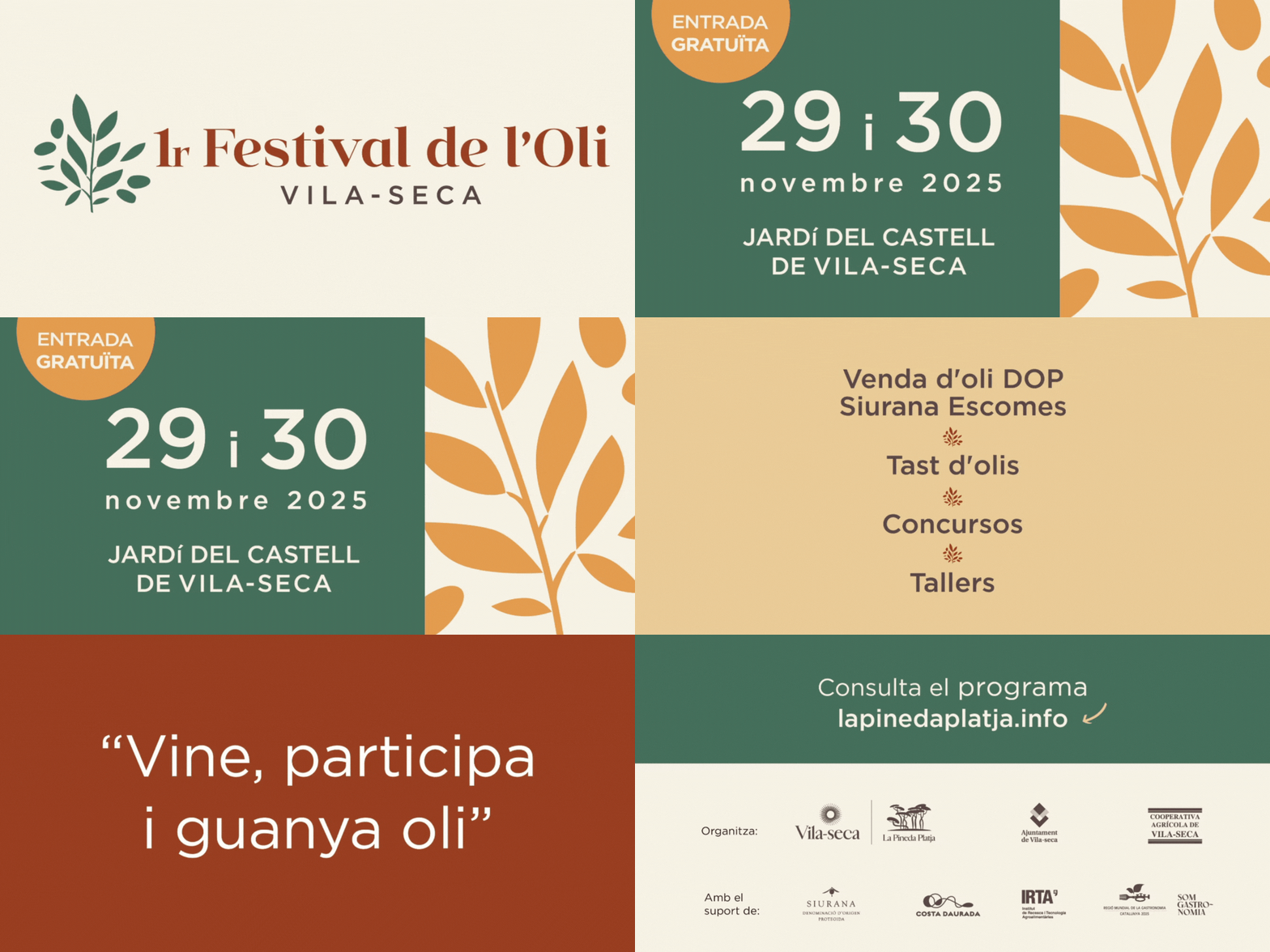
8 NovemberNew Olive Oil Festival of Mont-roig del Camp
8 November
News
Gothic Architecture: The light and height of medieval Catalonia
Gothic architecture marks a turning point in the history of Catalonia. It was the style that transformed cities, places of worship, and the way people built collectively. A style that changed not only the stone itself, but also the way people…
Iron architecture: the light and steam of industrial Catalonia
In the 19th century, the Industrial Revolution not only changed the way people worked and lived, but also profoundly transformed architecture. The arrival of new materials, such as cast iron, wrought iron, and glass, opened up possibilities…



 Sustainable turism
 Biosphere