

Come to Lleida, live in the moment
Photo: Església de Sant Climent de Taüll, Laia Díaz
THE PYRENEES AND THE LANDS OF LLEIDA, A PARADISE TO TASTE THE SUMMER IN THE HEART OF NATURE
Summer arrives and with it the good weather and the desire to do things, to spend quality time with the family, to enjoy the fresh air and the tranquility of being away from the crowds of big cities, to disconnect, to be able to discover elements of cultural and historical heritage or have the opportunity to live adventures and enriching experiences in incomparable surroundings and, in short, take advantage of our free time doing what we like the most. And if any place is ideal to be able to savor these summer months it is, without a doubt, the demarcation of Lleida. It is not by chance that the regions of the Pyrenees and the Lands of Lleida have become a benchmark for family tourism. The range of opportunities offered to visitors is immense, both in terms of monumental, natural or landscape heritage as well as when it comes to being able to carry out all kinds of activities that range from active tourism to hiking trails through dream spaces, passing by fairs and popular festivals in small idyllic towns and many other initiatives designed, precisely, to live as a family. All this means that the region of Lleida has become a tourist destination suitable for all audiences and where adults and children will find what they are looking for to enjoy their leisure time to the fullest, experience unforgettable moments and leave wanting to return.
Lleida for EVERYONE
And with the start of the summer period, the regions of the Pyrenees and the Lands of Lleida open their doors wide to the arrival of those who know they will find what they are looking for to enjoy a few days of tranquility with the family, and activity more exciting for those seeking stronger emotions. After a few years of the pandemic, we have recovered the desire to live in the moment and savor the little things that life provides us. And the demarcation of Lleida, in all its fullness, has a lot to offer visitors with an almost infinite range of possibilities to combine rest and adventure, nature and monuments, gastronomy and wine tourism, tradition and modernity, and all always well guarded by people. of a welcoming and peaceful disposition that become the authentic human patrimony of this land. For a few years now, tourism companies and entities have committed themselves to making the Pyrenees and the Lands of Lleida a sustainable destination that is respectful of the environment.
Since 2021, the demarcation has held the Biosphere Destination certification, which endorses a firm commitment to sustainability, responsibility and ecological tourism, which guarantees the economic and tourist development of the area, preserving and caring for the privileged natural and cultural environment of which has. The same people from the area, establishments, active tourism companies and tour guides are the first to raise the flag of environmental awareness, and ensure the preservation of the environment so that we can all enjoy it. Being able to combine its patrimonial and architectural wealth in the field of history and culture with an exceptional natural heritage that offers paradisiacal landscapes within the reach of almost everyone, makes the demarcation an ideal tourist destination to visit with the family.
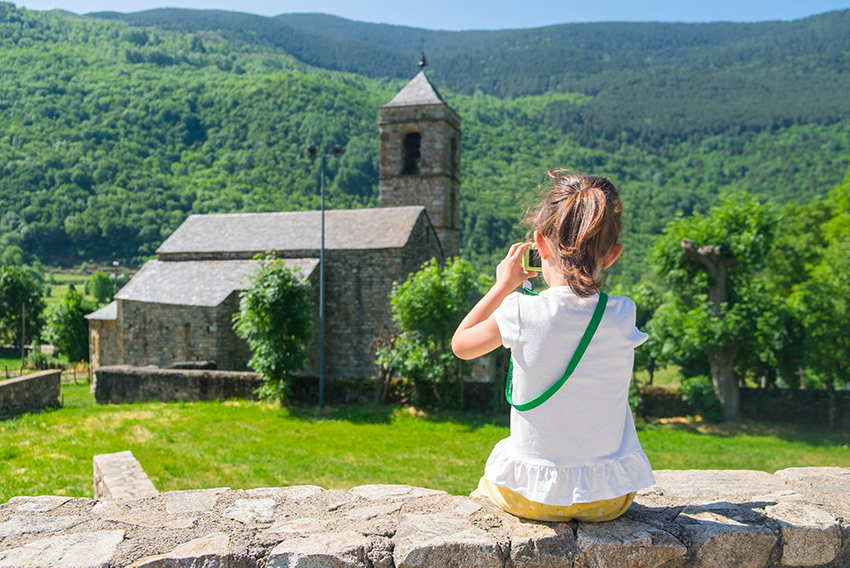
Photo: Church of San Félix de Barruera, Laia Díaz
Those looking to breathe fresh air and carry out activities surrounded by trees and nature to escape the noise and crowds of big cities, can find their ideal place in the Lleida Pyrenees. The Aigüestortes and Estany de Sant Maurici National Park is undoubtedly the jewel of the natural heritage of the Pyrenees, with almost 41,000 hectares of wonderful landscapes spread across the regions of Pallars Jussà, Pallars Sobirà, Alta Ribagorça and Val d'Aran. Walking trails and routes in the middle of this majestic park, discovering black pine or fir forests, admiring some of its almost 200 natural lakes or visiting one of the nine mountain refuges within its limits, becomes a unique experience. that everyone should experience at least once in their life.
The natural offer of the demarcation includes other interesting proposals such as the Alt Pirineu Natural Park, the largest in Catalonia with an area of nearly 80,000 hectares and which, among others, has within its territory the highest peak in Catalonia, the Pica d'Estats (3,143 meters). The Park becomes a reserve of the Pyrenean natural heritage both in terms of landscape and fauna with the presence of emblematic species such as the capercaillie, the bearded vulture or the brown bear. And all this offer is also complemented by the Cadí-Moixeró Natural Park, the second largest park in Catalonia distributed in the Lleida part between the Alt Urgell, Cerdanya and Berguedà regions, or many other corners such as Vall Fosca, Valle de Lord or the Ribera Salada that extend throughout all the Pyrenean regions and that the visitor will be able to discover little by little.
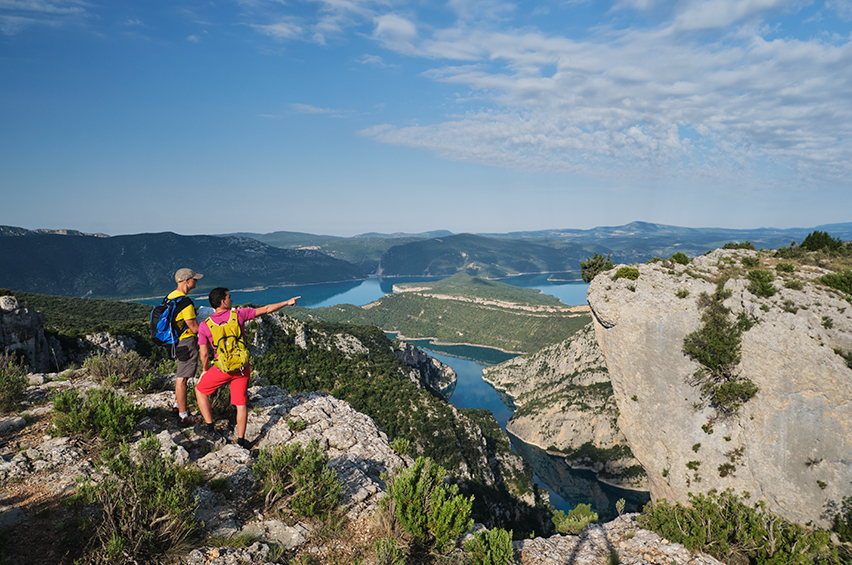
Photo: Puig de Millà, Oriol Clavera
But not only the Pyrenees hide places with special charm. It would be unfair not to highlight, in this sense, other proposals that extend throughout the demarcation such as the Montsec mountain range that hides treasures such as the Mont-rebei gorge or the Mu gorge, in Camarasa. Or further down, in the regions of La Plana, where you can find magnificent places where it is worth getting lost for a while, such as the Ivars and Vila-sana lake, the Segre-Cinca confluence, the drylands of Planes de la Unilla, Alfés thyme or the benches of the Urgell Canals, to mention just a few of the Ponent Natural Areas.
However, we cannot forget that there are also those who prefer to enjoy their vacations and their leisure time discovering new proposals related to history and culture, visiting monumental complexes or other representative samples of the country's tradition and customs. These travelers will also find in the Lleida region what they are looking for without a doubt. History and culture come together throughout the territory and are materialized in different formats that give rise to playful experiences, but at the same time educational, whose objective is to bring the traveler closer to different periods of our history. In this case, the monumental group of Romanesque churches of the Boí Valley, declared a World Heritage Site by UNESCO for its uniqueness, and the Seu Vella de Lleida, which crowns the capital of Segrià with its majesty and which is complemented by la Suda, the old Castle of the King, of Andalusian origin, or the cathedral of La Seu de Urgell, the only one in Catalonia that is entirely Romanesque.
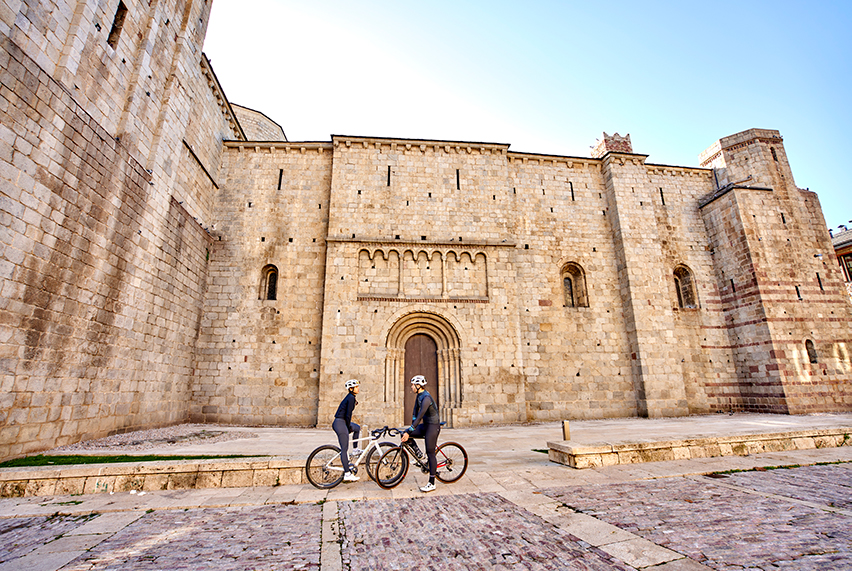
Photo: Cycling through Alt Urgell, ©JoanSeguidor/ Guillem Riera
But also in Lleida we can transport ourselves to prehistory from the Geoparc Origens or discover vestiges of rock art in the Roca de los Moros del Cogul, in Les Garrigues, with ancestral paintings that are also recognized by UNESCO. The Vilars fortress, in Arbeca, allows us to get closer to the way of life of the Iberians and the border castles, such as Mur in Pallars Jussà or Concabella, in Segarra, take us back to the times when Christians and Saracens disputed the Lleida territory. The Templar castle of Gardeny in Lleida, the Jewish quarter of Tàrrega, the Cistercian Route, the Urgell de Mollerussa Canals Space or the Capdella Tower Hydroelectric Museum are some of the other spaces that evoke key moments in history, the culture and even the economy of our region.
And if instead of looking back there are those who prefer to look to the future, they can also do so. The Montsec Astronomical Park (PAM), located in Àger, brings visitors closer to astronomy and allows them to perceive the immensity of the universe while inviting them to look towards the future that opens from scientific research in aerospace matters. Located in the heart of Montsec, this space has what is considered one of the best skies in the world for astronomical observation and enjoying the light of the stars, recognized worldwide thanks to the Starlight seal. It is undoubtedly a perfect visit for all lovers of science and astronomy. The Aigüestortes and Estany de Sant Maurici National Park also have the Starlight seal.
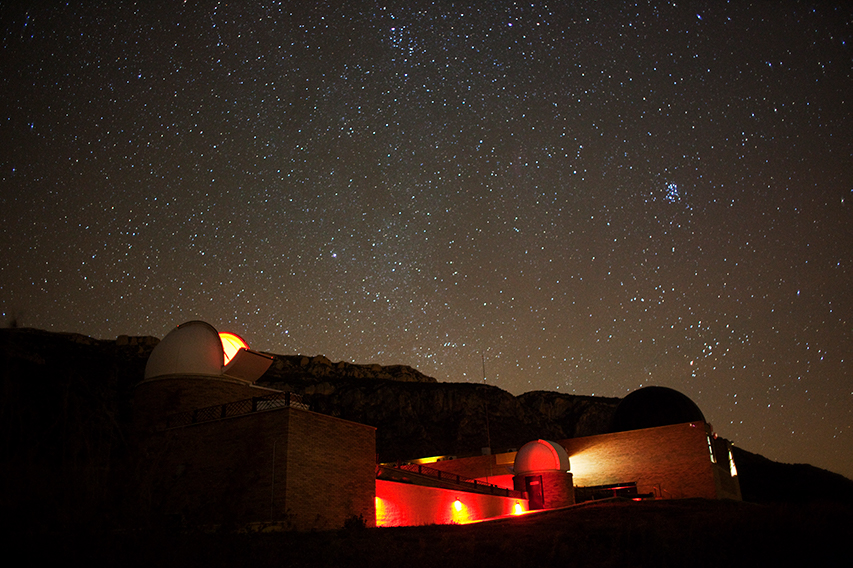
Photo: Montsec Astronomical Park, Oriol Clavera
And all this is complemented by a network of facilities distributed in all the Lleida regions that offer family activities in which both adults and children will have a good time together. The trips of the Train of the Lakes, from Lleida to La Pobla de Segur, with the historic train and with the magnificent panoramic views that the route offers, are an example. Also, visits to the Aran Park, in Bossòst, to get to know the wild fauna up close, or the possibility of looking for gold with the family offered by the Balaguer Gold Interpretation Center, are outstanding options. The Pyrenees Zoo in Odèn, in Solsonès; the thematic proposals of the Manreana, in Les Garrigues; the Roda a Roda Museum in Lleida city; the Salt Museum, in Gerri de la Sal, or the Valls d'Àneu Ecomuseum, are other proposals that complete the offer of family tourism in the demarcation.
AD · NOTICIES_NOTICIA · Slot: 3712634902
in search of adventure
Not everyone is looking for tranquility, relaxation and finding moments of rest to disconnect from their routine in the summer months. There are also those who seek to live adventures, carry out activities and sports in the middle of nature, be in constant movement and even generate adrenaline with more intense experiences. And yes, the regions of Lleida also offer this possibility, not in vain have they become a benchmark in active tourism on an international scale, a sector that has 270 specialized companies in the demarcation that offer more than 50 adventure and sports activities.
Rafting continues to be the most popular adventure sport and the spearhead of the offer in the regions of the Lleida Pyrenees, with Noguera Ribagorçana, Noguera Pallaresa, Garona and Segre as the center of activity. But there are also other disciplines, such as canoeing (canoe and kayak), hydrospeed, hydrosledding, canyoning, hydrobob and water trekking, to name the most popular. And for those looking to soak in calmer waters, the Rialb reservoir, the Seu d'Urgell Rafting Park, the Call de Ponts Rock Park, the two large Gimenells ponds, the Sant Ponç, Sant Antoni and la Torrassa among others, are ideal places to practice disciplines such as canoeing, underwater activities, kayaking, water skiing, sailing, paddle-surfing, windsurfing and ultratubing.
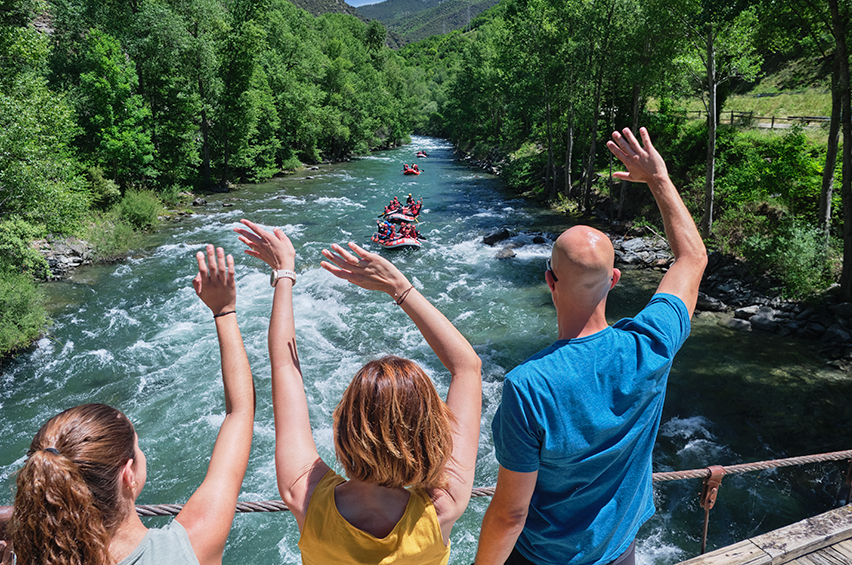
Photo: Noguera Pallaresa River, Oriol Clavera
Another of the highlights offered by the Pyrenees and the Lands of Lleida are sports and activities on dry land. Hiking and trekking through exceptional landscapes and hundreds of marked routes throughout the territory, with different levels of physical demand, are one of the main attractions to visit the demarcation for those who love outdoor activities and hiking. For their part, mountain fans have the chance to climb emblematic peaks such as Pica d'Estats, the highest in Catalonia; the Sotllo, in Pallars Sobirà; the Montardo, in the Val d'Aran, or the Besiberri and the Comaloforno, in the Alta Ribagorça, among many others scattered throughout the Pyrenees and which can be visited in the middle of summer without the need to carry special equipment, since the high temperatures summer help to melt most of the snow.
Horseback or quad excursions or mountain biking, road or gravel bike routes are other proposals that complement the catalog of activities suitable for these hot months. Also lovers of speleology, via ferrata or climbing have ideal areas to practice these hobbies. Camarasa, Sant Llorenç de Montgai, Vilanova de Meià, Oliana or the Terradets gorge are some of the points where fans of these disciplines are most concentrated. Finally, for those who like heights and flying, the municipalities of Àger, in La Noguera, and Organyà, in Alt Urgell, have become the main poles of air sports in the area with paragliding as a star product, but you can also practice other disciplines such as base jumping, ultralights, hot air balloon flights or gliding.
AD · NOTICIES_NOTICIA · Slot: 3712634902
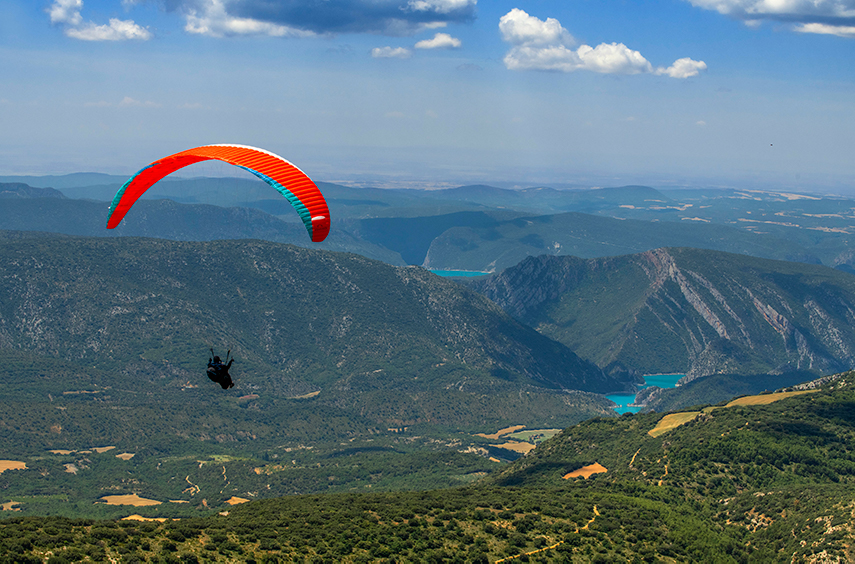
Photo: Paragliding in Àger, Sergi Reboredo
Magic for the palate
The so-called foodies or gastronomic tourists, interested in enjoying gastronomy and quality local products, also have a magnificent destination in the Lleida region that can provide their palates with the magic they are looking for. Local and top-quality products, a long tradition of chup-chup cuisine that is also mixed with touches of innovation in the kitchen, pairing with good wines and always close service are the guarantee that the gastronomic experience will be excellent. In fact, the Pyrenees and the Lands of Lleida have a long tradition of producing high-quality gourmet food. From oil from the Garrigues to beef from the Pyrenees, nougat from Agramunt, pear from Lleida, cheese and butter from Alt Urgell and Cerdanya and other proposals that enrich the gastronomic offer of the demarcation, marked by products from the land and by recipes that have traveled in time through generations. The snails, the torta de recapte, the casserole of pieces, the carving or the girella are just some examples of typical dishes and products that the visitor can find in the demarcation. And, on the other hand, the DO Costers del Segre within its Lleida Wine Route offers the possibility of visiting the wineries spread throughout the Lleida region, where you can taste and buy wines made by local producers with a seal that certifies their quality..
It is clear, then, that the Pyrenees and the Lands of Lleida have tourist proposals for all tastes, for all ages and that respond to all kinds of concerns and that, at a time like the present in which it is highly valued, Being able to enjoy the little things and savor every minute makes this demarcation one of the best options for investing leisure time well this summer. That is why to all those people who seek the tranquility that nature offers them, experience adventures and be able to do outdoor activities, visit monuments and cultural facilities, have an extraordinary gastronomic experience or simply be able to combine all these proposals to make your unique experience and spend quality time with family and friends, the best advice we can give you is: "Come to Lleida. Live the Moment". You won't find a better place to do it.
Author: Sergi Martí
More information:
aralleida.cat
AD · NOTICIES_NOTICIA · Slot: 3712634902

Related routes
Urgell Canal pedal route
Discover Lleida's plans by pedaling through the Urgell Canal, the most important hydraulic infrastructure work in the history of Catalonia, which changed the appearance of the landscape, the way of life of the people, promoting the development…
Grand Tour de Catalunya - Section 3. Heaven is very close. From Lleida to La Seu d'Urgell
I want to do this route by electric vehicle! This route is designed to be done by electric vehicle, although it can be done with any other car. Along the route we will suggest municipalities that have charging points and places of interest…
A trip in the Lakes' Train
Under the phrase "Seu, look i admire" ("Sit, watch and admire") the Lakes Train invites us to a journey time between land and water and connects Lleida and La Pobla de Segur , following a nostalgic way we go back in time. An atypical transport…
Wine Route: Costers del Segre
As has been said repeatedly, Catalonia is a land of contrasts, while even the fruits it gives are varied and diverse as the geographical area where they are grown. The wine sector and exemplified. In all there are eleven Catalan territory designations…
The cheese of Montsec
The Cordillera del Montsec, by their nature, welcomes attractions that arouse the interest of both visitors and residents themselves, besides having one of the highest quality night skies and be considered a Starlight Reserve. From the 80s…
Pala Alta from the Virgin of Montalegre
This is a circular route through the Sierra de Mont-roig. We start the route at the hermitage of Montalegre. To get to this point, we will have made a forest track of almost 6 kilometers from the road that leaves Vilanova de Sal.
The honey cooking
Honey is a popular and consumed by the population for the many benefits it presents. Often this is one of the stars of the sweetest moments of our lives but in turn is an unknown. The route presents to you this month femTurisme you will rediscover…
Orígen, Digital Tourist Gymkhana to discover Albesa!
Albesa, a town full of history and charm, invites you to an exciting adventure through a tourist gymkhana for the whole family! With your mobile device and a lot of curiosity, you can discover fascinating corners of this municipality. HOW DOES…
Route of the Sierra de Bellmunt Almenara
It is a circular route that crosses the Sierra de Bellmunt Almenara, signposted along its entire route with the sky blue color. Along the route we will find explanatory signs on some interesting points, such as the characteristic mud huts or…
The water route in Montgai
Montgai is a town in the municipality of La Noguera located in the Bajo Sió area, bordering the Bellmunt-Almenara mountain ranges to the south and Montclar to the north. The municipality of Montgai also includes the population of Butsènit,…
Featured
El Dien Restaurant
Vallfogona de BalaguerThe Dien, a different concept, a form of expression. Dien is our way of expressing what cooking means to us. The soul of Dien Here everything has its meaning and its history, even its name, which comes from the concept: Carpe Diem, live life and enjoy the moment, knowing how to appreciate those small moments and pleasures that are what make happiness, something so pleasant. The letter We like to cook, and we like our customers to receive on the table what we love in the kitchen. That's why we use seasonal, top-quality products and cook them with care. Our tasting menu includes dishes from traditional Catalan cuisine and Mediterranean cuisine prepared with the concept of creative and signature cuisine. We look forward to seeing you! New Km 0 Slow Food Signature Cuisine A unique, welcoming and elegant space, where organic and natural products are essential in the preparation of all its dishes. Reservations are required, we only have 4 tables available. Tables without prior reservation are not accepted. The snack area This is where the adventure of our tasting menu begins, a rustic and cozy area… Being the ideal place to enjoy or relax with coffee and that penultimate drink… The dining room A unique, cozy and elegant space with only 4 tables, so it is recommended to book in advance. Only for 16 diners, because we understand that a quiet atmosphere and intimacy are fundamental to our philosophy. Drink Our wines Choosing the right wine is a fundamental factor in accompanying a good meal and is a pleasure in itself. That is why we make a careful selection; many of the wines on our list come from small, not very well-known but high-quality wineries. The Dien has a very limited capacity, so we only have about eighty references between wines and cavas, more than 95% organic, biodynamic, in conversion or natural wines without added sulphites. The winery is located in the lower part of the establishment where the conditions are more appropriate, humidity and temperature are controlled. The 7 cubic meter cellar has the capacity to hold 1,138 bottles.
La Roca dels Bous
CamarasaIn Sant Llorenç de Montgai ( Camarasa ), in the heart of the Noguera region, there is a place where the landscape speaks with an ancient voice. Between the first foothills of the Pre-Pyrenees and the Segrià plain, the Cinglera de la Cascalda holds one of the most fascinating testimonies of Catalan prehistory: the Roca dels Bous, an archaeological site that transports us back some 50,000 years, when groups of Neanderthals stopped at this natural pass during their migrations. What is today a site full of discoveries was, in a distant past, a place of refuge, activity, and daily life. Neanderthals lit fires, made tools, made use of the area's resources, and observed a landscape very different from our own, yet intimately connected to the paths, rivers, and mountains that still define this corner of the Noguera region. La Roca dels Bous is not just an archaeological site: it is a window to the past. Thanks to the excavations and research carried out by the Center for Studies of the Archaeological Heritage of Prehistory at the Autonomous University of Barcelona, this site allows us to better understand how Neanderthals lived and how modern archaeology is able to reconstruct their history from small traces: fragments of tools, animal remains, combustion structures, and sediments that preserve the memory of thousands of years. A living archaeological site in a spectacular setting The visit to Roca dels Bous begins at Espai Orígens, the reception area where visitors receive the necessary instructions to start the tour. From there, a route begins that combines landscape, science, and emotion. The path leads to the base of the rock shelter, where the discovery of Neanderthal Territory begins. The setting is one of the great attractions of the experience. Sant Llorenç de Montgai offers a unique combination of nature, water, and rock, with the Segre River as the main feature and the cliffs as the backdrop. This landscape, now ideal for walking and enjoying tranquility, was thousands of years ago a strategic point for prehistoric communities. Its location, between the mountains and the plains, facilitated the movement of human groups and access to essential resources. During the tour, visitors can imagine what this territory was like in Neanderthal times. It's not a conventional visit, but an immersive experience that invites you to see the landscape with new eyes. Each stop along the route helps interpret the environment and understand why this place was repeatedly occupied during the Middle Paleolithic. One of the most interesting aspects of Roca dels Bous is that it is an ongoing archaeological site. This means that research is continuous and that each archaeological campaign can yield new information about the past. Visitors are not simply looking at a museum space, but at a place where research continues to advance and where knowledge is built step by step. Technology to understand prehistory La Roca dels Bous also stands out for its innovative approach to bringing prehistory to the public. The visit incorporates digital touchscreens with audiovisual content that accompany the tour and help interpret the site. This resource allows visitors to see what is often not immediately apparent: how tools were made, how space was organized, the role of fire, and what activities Neanderthals might have carried out around the rock shelter. The tablets can be used independently or with the support of a guide, adapting the experience to different audiences. Families, schools, groups of friends, or anyone interested in history will find here a clear, visual, and engaging way to delve into a period as distant as it is fascinating. This combination of archaeological heritage and technology makes the visit a particularly appealing experience. Prehistory ceases to be an abstract concept and becomes a tangible, immersive experience. Images, videos, and explanations help bring to life an archaeological record that, without interpretation, might otherwise go unnoticed. Here, every stone, every remnant, and every layer of the site takes on meaning. Neanderthals, closer than ever Visiting Roca dels Bous is to get closer to ancestors often shrouded in clichés. Far from the simplistic image that has long been held of Neanderthals, this site reveals human groups with adaptability, knowledge of the territory, and mastery of complex activities. Investigations have documented recurring occupations, hearths, and tools made from various raw materials, suggesting a well-organized settlement and intelligent use of available resources. Fire, in particular, plays a prominent role here: the hearths found at the site help us understand how daily life was structured and the role this element played in providing light, warmth, protection, and carrying out daily activities. All of this makes Roca dels Bous an ideal visit for anyone wanting to discover the past in a different way. It's a place to learn, but also to imagine. To pause before the cliff and think that, 50,000 years ago, other humans occupied that same place, gazed upon that same territory, and left a mark there that we can only begin to understand today. La Roca dels Bous is heritage, research, and landscape. It is a unique cultural offering in the Noguera region and a magnificent opportunity for meaningful tourism: walking through the present while opening a door to the distant past. *Accessibility information: access to Roca dels Bous is not accessible for wheelchair users.
Monestir de les Avellanes
Os de BalaguerAncient abbey from the 12th century adapted to the needs of the 21st century. Located in a spectacular natural setting of forests, gardens and vineyards, ideal for enjoying a peaceful break. Hospitality The Monastery of Las Avellanes has symbolically hung the doors that once closed the wall on the entrance wall, to illustrate the state of hospitality that has always accompanied the Monastery. The rooms and interior spaces, completely renovated, have been converted into a three-star hotel. The uniqueness of the building and its surroundings frame this charming hotel. It has 37 very cozy double rooms, all of them exterior, with all the comforts: Full bathroom Air conditioning Phone Internet connection Piped music Dryers Beautiful views Services The Monastery also offers rooms such as the former monks' dining room, now transformed into a spacious room with sofas for visitors. Also, the old kitchen and pantry The refectory, the old monks' dining room is today a room where you can have a coffee, a drink, go on the Internet or chat, rest, etc., while you contemplate the landscape. Inside the monastery itself, and with views of the 12th-century Romanesque cloister, you will find the monastery restaurant, where you can enjoy traditional Noguera cuisine and avant-garde cuisine prepared by our team of chefs. Meeting rooms Historically, monasteries have been centres of knowledge and learning, spaces for reflection and the creation of ideas, which have then spread around the world. That is why one of the aims of the Monestir de les Avellanes is to continue this tradition of meeting, creation, debate and knowledge, now opening its doors to everyone and adapting to the needs of the new times. Spaces have been enabled and prepared in rooms for holding meetings, activities, conferences, etc. Thus turning the Montsec Meeting Centre into a unique place to hold meetings and corporate stays. The Montsec Meeting Centre has an ideal complex for holding your meetings, 11 rooms equipped with all the technology and comforts, perfect for holding conventions, congresses, debates, etc. Completely open-plan rooms of different sizes and characteristics. All with large windows facing the outside, with spectacular and relaxing views, which give the added touch of uniqueness to meet the needs of your company. House of spirituality For those individuals or small groups interested in making a spiritual stay in a broad sense, while participating in the life of the community. They are a community of Marist brothers who welcome all who come, as if they were receiving Jesus himself, and thus live, in a concrete way, universal brotherhood. Archives and libraries The archives and libraries are the representatives of the cultural branch of the set of services offered by the Monastery of Las Avellanes. The archives part is represented by: The Archive of the Bellpuig de las Avellanedas Monastery (AMBA). Its origins come from the ancient archive of the Premonstratensian canons of Bellpuig de las Avellanes. It currently serves as the historical archive of the Institute of the Marist Brothers of Catalonia. Province of the Hermitage. The Gavín Archive (AG). It is considered one of the largest personal archives in Europe. Since 2008 it has been permanently housed in the Monastery of Les AVellanes. It has documentary collections of interest to those who need information on Catalan religion and culture. The Monastery Library also has a symbolic aspect, recalling the ancient and great library that this monastery had until the mid-nineteenth century. Currently the library is made up of three different sections: the general library, the specialized library and the Marist library. The newspaper section is made up of Marist periodicals and religious and educational topics from a Catalan perspective. The Monastery of Las Avellanas participates in the Porcpassió gastronomic festival, which is held every year during the month of November in the province of Lleida.
Cal Guineueta
CubellsThe House Cal Guineueta is a late 19th-century family home recently renovated as a holiday home, close to the most important natural sites in the La Noguera region. Originally, in addition to being the primary residence of its residents, the house accommodated prominent figures who came to the town of Cubells. Since then, for six generations, the house has been inhabited in different ways, and now it begins a new life, opening its doors to welcome you as guests. The house is ideal for spending a few days on family vacations, work retreats, or simply seeking tranquility in your free time. The interior spaces have been designed to imbue the accommodation with serenity. Its large garden offers relaxing nooks, a pleasant retreat among olive trees, wildflowers, and a large expanse of grass overlooking the pool. The house can accommodate eight people and has four bedrooms, two bathrooms, a living room, a kitchen-dining room, and a laundry room. It also has a patio that evokes the site's native architecture. Evenings on the porch, next to the pool, are suitable for barbecues, and when night falls you can observe the stars in a sky without light pollution, which makes it a tourist destination Starlight. Starlight Zone The town of Cubells has been recognized as a municipality with a sky free of light pollution and that preserves the darkness of the night sky. The Starlight Zone is an area where the natural darkness of the night has a special value and is protected to facilitate observation of the universe. The natural environment and nature sports The house is located near the most beautiful landscape enclaves of Noguera and the Pre-Pyrenees: Sant Llorenç de Montgai Nature Reserve, the confluences of the Segre with the Noguera Pallaresa and with the Noguera Ribagorçana, the Montrebei gorges and the Mu gorge. The Camarasa, Canelles, Sant Llorenç de Montgai, Santa Anna, and Rialb reservoirs comprise the largest area of calm waters in Catalonia, perfect for canoeing, motorboat rides, windsurfing, bob-skiing, and more. On the Segre River, where the waters are rougher, you can go rafting and mini-rafting, and canyoning on the Rialb River. Cubells is located near Àger and Vilanova de Meia, ideal places for free flight. Climbing is also within reach in the same municipality of Cubells, or in Camarasa, Sant Llorenç, Vilanova de Meià. From the house you have access to the Montsec-la Noguera BTT routes, integrated into the Catalonia BTT network.
Castell del Remei
LleidaCastell del Remei is a century-old winery located on a historic estate of the Costers del Segre Designation of Origin, where the first vestiges of winemaking activity date back to 1780. It is the oldest winery in Catalonia in the production and labeling of fine aged wines, and also the first Catalan winery built according to the Bordeaux-type model of a château surrounded by vineyards. It is nourished by grapes from the estate and vineyard plots in the nearby mountains. It is run by its owner, the viticulturist Tomás Cusiné, a renowned winemaker, and considered one of the best wine assemblers in the country. The characteristics of Castell del Remei, as a wine property, are as interesting as its long history and together with the heritage value of the complex they complete an unparalleled complex in the wine-growing regions of southern Europe. The property is located in the municipality of Penelles, in the La Noguera region, in Lleida, about 120 km from Barcelona. The estate, ideal for wine production, has a Mediterranean-continental climate: wide thermal oscillation, with very cold winters and hot summers; low rainfall and medium humidity. In this region, winds from the west and northwest predominate, which are accentuated in spring. The most precious of them is the marinade, which arrives on hot summer afternoons to cool the grapes. Another of the climatic singularities of the area is the persistent fogs in winter. The soils on the property are predominantly clay-calcareous. The vineyard plots are located on the bed of the inland sea that occupied a good part of the Central Depression during the Cenozoic era and are located on fertile soils of mostly alluvial composition. The winery has about 100 hectares of vineyards on its property. The cultivation of most of the vineyard (80%) takes place in vineyards in the mountains near the Castle, with an altitude (between 700 and 800 meters), on soils with a loamy texture (loamy loam or clay loam) with abundant presence of gravel, which allow good drainage. As for the varietal composition, it includes the native vines (Grenache, Tempranillo, Cariñena, Drilling, Malvasía and Macabeo) to which were added those of French origin that Castell del Remei introduced to the peninsula in the 19th century (Cabernet sauvignon, syrah, chardonnay, white sauvignon). The average age of the vines is over 25 years and the vineyards are trained in trellises, according to the double cordon system (Royat Double), with a planting density of between 4,000 and 5,000 plants/hectare. The original facilities of the winery comprise a total area of 5,500 m2 and are distributed in six attached warehouses, built on stone, with a wrought iron structure and walls up to 100 cm wide. Currently, the aging rooms house approximately 1,000 barrels (50% French and American oak), while the winemaking area is equipped with thermoregulated stainless steel tanks, pneumatic presses and other state-of-the-art technical tools that allow produce more than one million bottles of wine annually. Castell del Remei carries out ecological and sustainable management of the entire estate. Furthermore, treatments are minimized to promote the vegetative development of the strains. In this sense, it is worth noting that Castell del Remei promotes research in the fields of viticulture and oenology in a clear commitment to ecology and innovation.
Museu Casa Tonot
AlmenarThe Casa Tonot Museum is located on the ground floor, in a unique room, in the old town, on Calle Mayor de Almenar. This historic site is located in an old building that has kept intact the charm and authenticity of the original structure. You can admire the beauty of the vaults that cover the ceiling, as well as the robust stone pillars that support the building, all of them witnesses of the architectural past of the town. In addition, typical elements of traditional constructions have been preserved, such as stone troughs and sinks, which offer a direct connection with the rural activities of times past. Inside the museum, the space is organized into various thematic areas, each dedicated to representing the different activities and aspects of life in the rural world. Visitors can explore a wide collection of traditional tools and implements used in field work, discovering first-hand the value and utility of each of the pieces on display. The arrangement of tools and objects in specific contexts allows a better understanding of how they were used in daily life, thus offering a detailed insight into the working life of our ancestors. The museum also pays special attention to the dissemination of ancient trades of the period, some of which have already disappeared or have evolved significantly. Visitors can delve into the history of these trades through the exhibitions, which include tools, products and photographs illustrating the techniques and processes used. In this way, the museum not only preserves but also disseminates knowledge of these traditional jobs, allowing the public to better understand the importance they had for the economy and social life of the rural world. The museum also offers a fascinating collection of everyday life in the rural world, presenting objects and scenes that reflect the domestic activities and customs of the time. Visitors can see how people lived in the past, from food preparation to household chores, providing an immersive experience that transports them to a time when the pace of life was very different from what we know today. Find out!
Related villages
Balaguer
Balaguer is the capital of the La Noguera region, which in turn is the largest region in the entire Catalan territory. Balaguer traces its origins to the arrival…
Arbeca
Arbeca Township is located in the northern region of Les Garrigues, the límit of a county of Urgell. On the Western borders Borges Blanques and Puiggròs…
Ponts
The town of Pons, officially and in Catalan Ponts, is a Spanish municipality and town in the province of Lleida located in the Catalan region of La Noguera. It…
Vilanova de Meià
Vilanova de Meià is a municipality in the district of La Noguera. Its term also includes other population entities: the nucleus of Santa Maria de Meià,…
Rialp
The baptism of the waters of the Noguera Pallaresa animates the smallest corners of the town of Llavorsí, from where the river starts again after receiving…
Oliana
Oliana is a Spanish municipality in the province of Lleida, located in the region of Alt Urgell, Catalonia. According to 2009 data, its population was 1,976 inhabitants.…
Lleida
Lleida is the capital of the Segrià region and also that of Tierras de Poniente. Its municipality is the largest and most populous in the region and has…
Montoliu de Lleida
The premises of the Montoliu de Lleida City Council are located in a beautiful stone house located near the Church of the Nativity. The municipality has very varied…
Bossòst
Bossòst is a lively town in the Baix Aran region with shops that attract many visitors, mainly from the neighbouring country, as it is just a few kilometres…
La Seu d'Urgell
La Seu d'Urgell is the capital of the Alt Urgell. It is located in the Pyrenees and is part of the natural region of Urgellet, which together with Andorra was the…
Camarasa
Camarasa is a municipality in the comarca of Noguera which includes several entities among which Fontllonga and Montsec Ametlla. Camarasa hosts a large number of…
Sarroca de Lleida
The architectural style of the building in which the Sarroca de Lleida town hall is located has clear medieval reminiscences. In this municipality of Segrià,…
Artesa de Lleida
Artesa de Lleida, located just ten kilometers from the capital of Segrià, invites you to stroll along the Camino de Santiago, to discover its corners by…
La Vall de Boí
The Boí Valley: nature, culture, and sport in the Pyrenees Vall de Boí is a municipality of eight small towns that, thanks to its isolation, has preserved…
Organyà
Organyà is a Pyrenean village of Alt Urgell, in the province of Lleida. To the north delineated with the gorge of Tresponts, on the south by the Spy bridge,…
Puigverd de Lleida
In the center of the town of Puigverd de Lleida stands the Town Hall building, a beautiful stone construction that is part of the urban complex of the Plaza Mayor,…
La Pobla de Segur
La Pobla de Segures the second largest urban center of the Pallars Jussà and head of the subregion of the Conca de Dalt. The municipality is composed of…
Àger
Ager is a municipality in the comarca of Noguera, is physically located between the Noguera Noguera Ribagorçana Pallaresa i. Specifically Ager is located…
Events
Second-Hand and Antiques Market in Tona
7 NovemberGuided tour of the Castell-Palau and the Old Town of Bisbal d'Empordà
7 NovemberGuided tour of Hostalric Castle
7 NovemberChestnut tree and Halloween in Lliçà d'Amunt
7 NovemberREC.0 Experimental Stores of Igualada 2026
From 4 to 7 NovemberÀnima - Andorran Puppet Festival in Encamp
7 NovemberQuince Aioli Fair in La Pobla de Lillet
7 November
Experiences
Digital Gymkhana Orígens by Albesa
AlbesaDo you want to experience a family adventure? Do you want to discover the origins of Albesa's culture? Do you have your phone or tablet handy? The gymkhana we propose begins like this: Marta wants to study a degree in Culture at the University…
Guided tours along the Albesa heritage route
AlbesaA tour of our village will allow you to discover an important part of Catalonia's history. Almost every civilization that has passed through the region has left its mark on Albesa. The Romans bequeathed to us one of the most outstanding archaeological…


 Sustainable turism
 Biosphere