

Municipalities
The Costa Brava is the coastal area of the province of Gerona. It is a captivating around 214 km of coastline stretching between Blanes in the south and the French coast in the north. Currently it is one of the main tourist centers in Catalonia, but it still reserves places where it keeps the magic of the past alive.
On this route we suggest combining visits to coastal cities, such as Blanes and Tossa de Mar, with inland municipalities, such as Caldes de Malavella and Hostalric. The objective is to rediscover the most touristy Costa Brava and introduce you to small pleasures that are still half hidden. Are you signing up?
A route through the soul of the Costa Brava
The Costa Brava is the name given to the coastline of the province of Gerona. It is a captivating area with around 214 km of coastline that includes the regions of Alt and Baix Empordà and La Selva and that extend between Blanes, to the south, and the French coast to the north.
The Costa Brava has it all because you can enjoy an unforgettable weekend: nature -beaches and forests-, world-famous historical and artistic vestiges and a Mediterranean climate with 2,500 hours of sun per year.
The route
It is impossible to cover the entire Costa Brava in a single route and, therefore, in this first one we will focus on the southernmost part, which has to do with the Selva region and towns such as Blanes, Lloret de Mar, Tossa de Mar, Caldes de Malavella and Hostalric. The element in common in all of them is water, omnipresent throughout the entire route, both in the form of the sea and healing waters.
The town from which the route and the Costa Brava begins is Blanes, a city of medieval origin that has one of the longest beaches in Girona. If you walk through its old town you will find nineteenth-century houses and many examples of Gothic architecture, such as the Portal del Monte or the hexagonal fountain on Ample Street.
In addition, you can also visit the municipality's two internationally recognized gardens: the MariMurtra botanical garden, one of the most beautiful in Europe with more than 4,000 species of plants arranged in three areas: tropical, temperate and Mediterranean; and the Pinya de Rosa garden, which houses the most important collection of cacti in the world with 7,000 species.
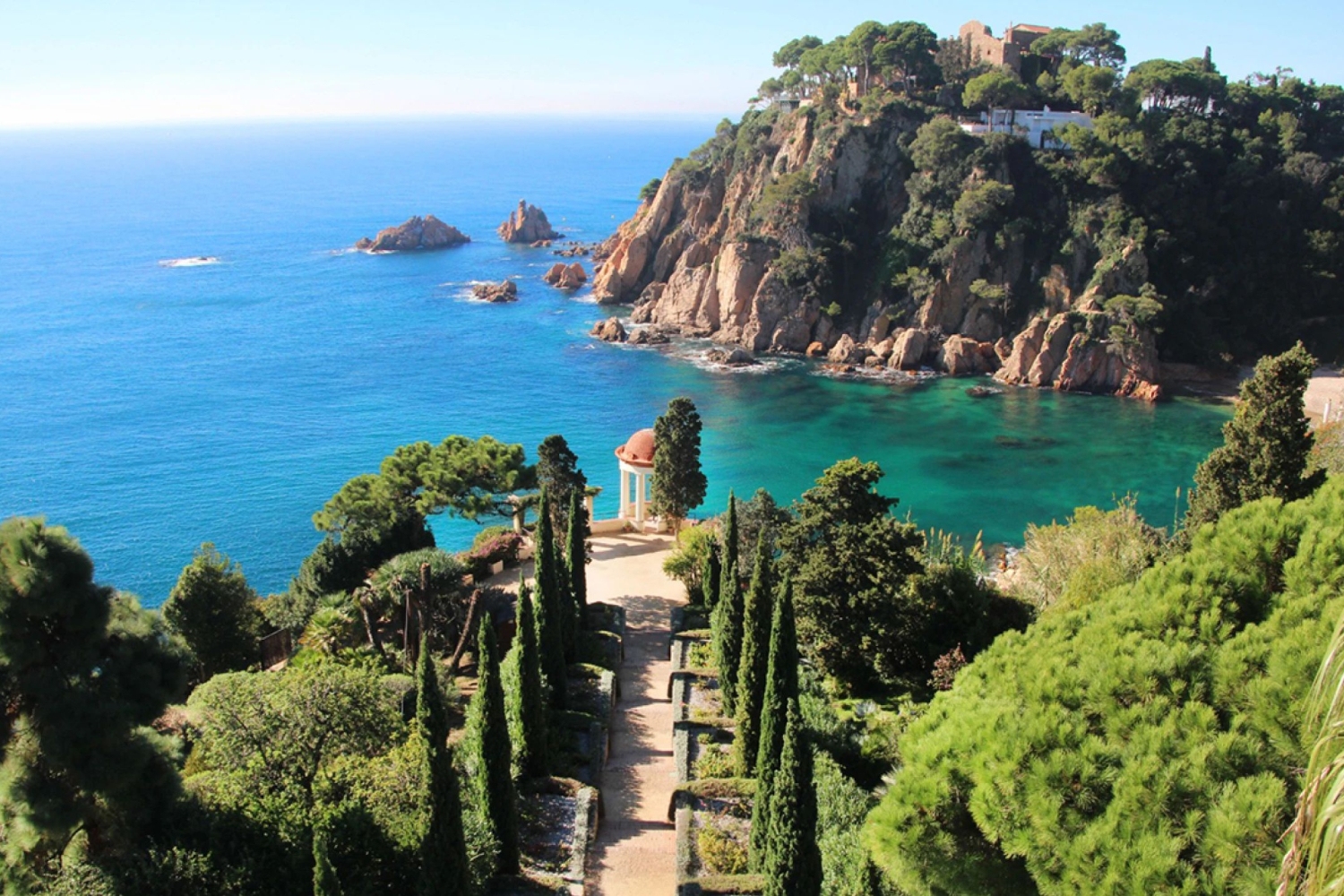
Jardí botànic MariMurtra. Font: Costa Brava Pirineu de Girona
If you continue north, after Blanes you will reach Lloret de Mar, the most touristic city on the Costa Brava. However, it still preserves places of great interest, such as the Iberian town of Puig Castellet (inhabited in the 4th and 2nd centuries BC), the gardens of Sta. Clotilde (near the nudist beach of La Boadella) and several houses of Indians. And although it may seem surprising, you should visit its cemetery, a modernist work with tombs and pantheons made by Puig i Cadafalch. It is, therefore, a city of great contrasts where, in addition to cultural tourism, you can carry out sports activities of all kinds, from golf to scuba diving.
Eleven kilometers north of Lloret, you will find Tossa de Mar, one of the most charming fishing towns on the Costa Brava. The so-called Vila Vella is the only example of a fortified medieval town that still exists on the Catalan coast, with three hundred meters of walls crowned by battlements and seven defense towers. It dates back to the 13th century and at its peak (15th century) it included around eighty houses. Since 1931 it has been considered a National Historic Artistic Monument.
This town is so attractive that even actress Ava Gardner lived there for a while while she was filming Pandora and the Flying Dutchman.
Already towards the interior of the region, halfway between the Costa Brava and the Sierra de las Guilleries, we recommend that you visit Caldes de Malavella, a town famous mainly for its mineral-medicinal waters of 60ºC, a product of the faults of the terrain and subsoil geothermal activity. In fact, already during Roman times and under the name of Aquae Calidae, the town was known for its healthy benefits and at the end of the 19th century it became an important spa center where wealthy families from Barcelona went. Among all the spas, we highlight Vichy Catalán, which has its origins in that golden age of modernism and noucentisme and is one of the most important in the country.
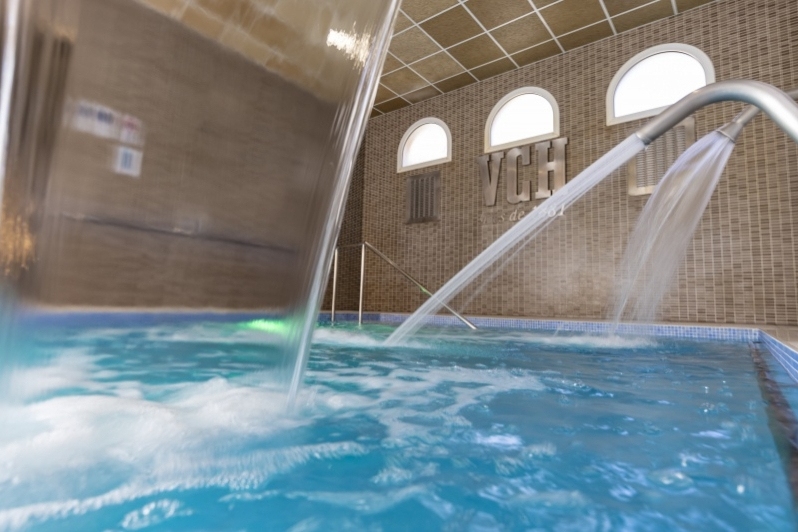
Vichy Catalán, Costa Brava. Font: Caldes de Malavella
And another ten kilometers south of Caldes you will reach the end of the route, in the fortified city of Hostalric. The fortress follows the old Royal Road and was created in 1145 to guard the delta of the Tordera River. About 600 meters of wall are preserved and the entire complex has been declared a historical-artistic monument.
You can also visit the Relliguer cave, which is 26 meters long and ends in a room located 6 meters deep. Legend says that perhaps it was used by the Jewish families of the town to meet secretly.
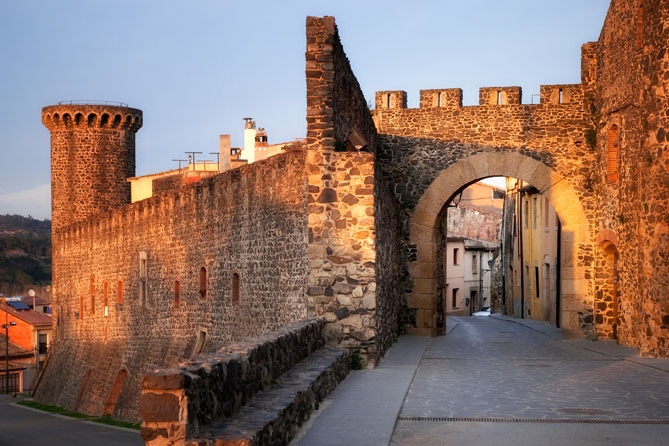
La Fortalesa d'Hostalric, Costa Brava. Font: Turisme d'Hostalric
AD · RUTES_RUTA · Slot: 3740555068
How to get to the Costa Brava?
- If you come by road you should know that the AP-7 crosses the Costa Brava from north to south, as well as the N-440.
There are buses that link the main European cities with municipalities on the Costa Brava. - If you come by plane you can choose a flight that lands at Girona or Barcelona airport.
- If you prefer to arrive by train, it is important that you know that Renfe does not have stations in all the main municipalities. Before traveling consult their website www.renfe.es
When to go?
Any time of year is good to get lost on the Costa Brava. Both in summer and winter you can take advantage of the stay to sunbathe, do some sports activity linked to the sea or take relaxing walks through the historical sites in the interior.

Nearby routes
Ruta de la Tourdera: from Hostalric to Malgrat de Mar
Fogars de la Selva, Hostalric, Malgrat de Mar, Palafolls, Tordera
La Tourdera is a route to do on foot or by bicycle that runs along the river courses of the Tordera river and the Arbúcies stream, and that links the Mediterranean (Costa Brava and Costa Barcelona) with the Montseny Natural Park and…
Circular route pedaling between cork oaks and hot springs
Caldes de Malavella, Cassà de la Selva, Girona, Llambilles, Quart
Route: Girona – Cassà de la Selva – Caldes de Malavella (return to Girona by train) Start: Girona Station End: Caldes de Malavella train station Route: Circular, bicycle + train Distance: 27 km of pedaling route Difficulty:…
Related routes
Route with Josep Pla
Palafrugell, Pals
Josep Pla i Casadevall is considered one of the best writers Catalan history, his work, thirty thousand pages of prose, is one of the most read in Catalan and has been translated into eight languages. Follow your path will allow us to see places…
Route around the Montgrí Castle
Torroella de Montgrí - L'Estartit
Mountain shoes, water, a hat to cover you peel if the day is forecast sunny, and little more need to climb up to the castle Montgrí, visible from many points of Empordà and seated on a bare, rounded mountain that is not . many…
Wine lands Priory
Falset, Gratallops, La Morera de Montsant, Porrera
When we refer to the territory of the Priory tarraconense inevitably also we do it from his wine because, despite being a region of small dimensions, enjoys international prestige as a wine reference. The reality today in this region makes…
Fair of Indians
Begur, Palafrugell, Sant Feliu de Guíxols
In the late sixteenth century to about the beginning of the twentieth century experienced significant movements of people crossing the Atlantic, embarking on a journey overseas, going to America to seek his fortune. These people are known today…
Events
Night of terror in Lliçà d'Amunt
7 NovemberAutumn Festivalet in Santa Susanna
7 NovemberSecond-Hand and Antiques Market in Tona
7 NovemberGuided tour of the Castell-Palau and the Old Town of Bisbal d'Empordà
7 NovemberGuided tour of Hostalric Castle
7 NovemberChestnut tree and Halloween in Lliçà d'Amunt
7 NovemberREC.0 Experimental Stores of Igualada 2026
From 4 to 7 November








 Sustainable turism
 Biosphere